

Archival Summary
The Work That Keeps Life Living
Naelis is frequently described as a goddess of healing. The description is accurate in the same way that calling a house a roof is accurate: the visible function is present, but most of the structure remains unnamed.
Medicine occupies a central place within her worship because bodies are vulnerable. Yet a healed body returned to hunger remains endangered. A child delivered safely into a household without shelter has survived one peril only to enter another. A wound may close while the contaminated water that caused the infection remains unchanged. A farmer may produce an abundant harvest and still watch neighbors starve if the crop cannot be stored, transported, or shared.
Naelis binds medicine, community, sanctuary, and agriculture because each sustains the others. Her theology concerns the conditions that allow life to continue as life rather than as prolonged emergency. Food, shelter, safety, clean water, cultivated land, medicine, companionship, animal health, and the ordinary labor of maintaining them all fall naturally within her regard.
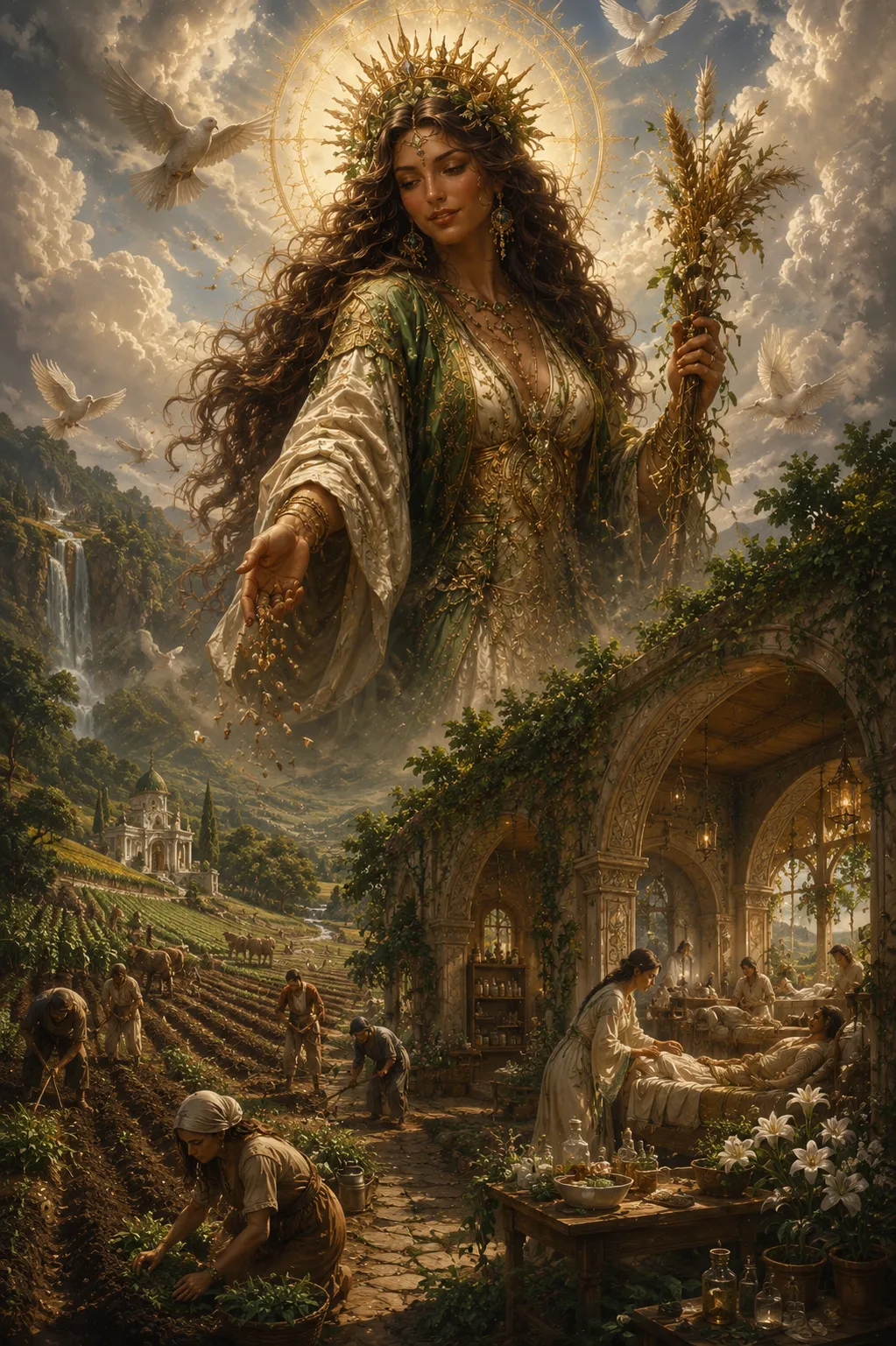
This has given her worship a distinctly practical character. Naelisan temples are more likely to be judged by their kitchens, gardens, treatment rooms, storehouses, and refuge beds than by the height of their sanctuaries. Naelis is also a goddess comfortable with the physical work of her portfolio; traditional representations place soil upon her hands, blood upon a healer’s cloth, grain against her robes, or an animal resting against her knees. Within Naelisan understanding, the willingness to enter the work is part of what reveals her divinity.